


How many examples of introducing the ESG principles in an industrial company have you seen recently?
The Bulgarian partner of the IntegratESG consortium (SBC) was hired by an international electrical cabinet producer to analyse the improvement potential and introduce new green models of work within 2 of their local plants in Bulgaria.
100 workplaces turn into 100 opportunities for greener work
SBC formed a team of ESG auditing experts to analyse the work processes and the available documentation together with the HR management of the two plants. Current certifications towards industry standards and best practices were summarised together with previously implemented actions. After approaching sustainability through corporate policies, environmental targets and management-level initiatives, the experts took a workplace-by-workplace approach to closely investigate improvement areas.
The key question was simple: What can the person performing this particular job do differently to reduce the environmental impact of their everyday work? How can the processes and the labour organisation help?
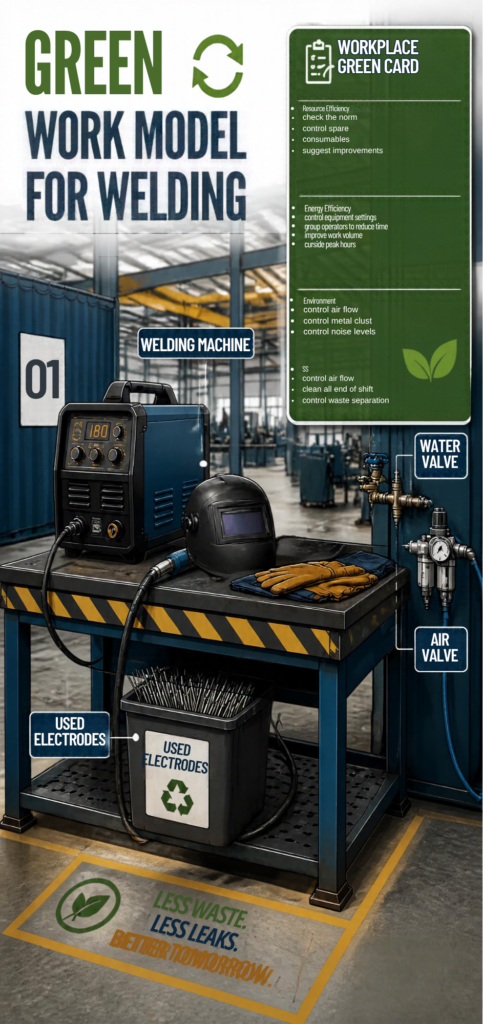
The answer resulted in the development of individual Green Work Card for each workplace.
What is a Green Workplace Card?
Each card translates the general principles of ESG and resource efficiency into specific actions relevant to the particular job. It contains the plant name, workplace classification, the name of the work position. Further it addresses 6 areas of improvement recommending actions:
- reducing unnecessary electricity consumption;
- avoiding unnecessary water and air usage;
- reducing material waste at this workplace;
- using materials and resources more efficiently;
- applying 5s within the work zone;
- avoiding unacceptable deviations from the defined ones;
As a result, each employee was provided with a small workplace specific practical piece of advice how to contribute to the company’s sustainability performance. Plant workers were happy to start using the green workplace cards and control the additional aspects of their work. The plant managers were thrilled to become the change agents and spread the new green improvements. The responsible ESG roles started measuring the impact and assessing the outcomes.
Igniting the change
Training 1000 employees across two plants was a challenging task itself. Changing the work habits of long- year employees is not an easy task. SBC experts decided to create short one minute video showcasing the use of a green workplace card. Videos are projected few times a day on the tv screens within the factory communication system. All division supervisors in the plants had to undergo a short training and then further train their teams.
The approach demonstrated an important shift in thinking. ESG is often associated with management systems, sustainability reports, KPIs and regulatory requirements. These are important, but they do not automatically change what happens on the factory floor.
Green Work Cards create a connection between the organisation levels:
ESG strategy → workplace → employee action → resource efficiency → organisational impact
Why this example matters
The Bulgarian case demonstrates that green transformation does not necessarily begin with major technological investments.
IntegratESG is co-funded by the European Union under Erasmus+ (Agreement No. 2024-1-PL01-KA220-VET-000253738).